
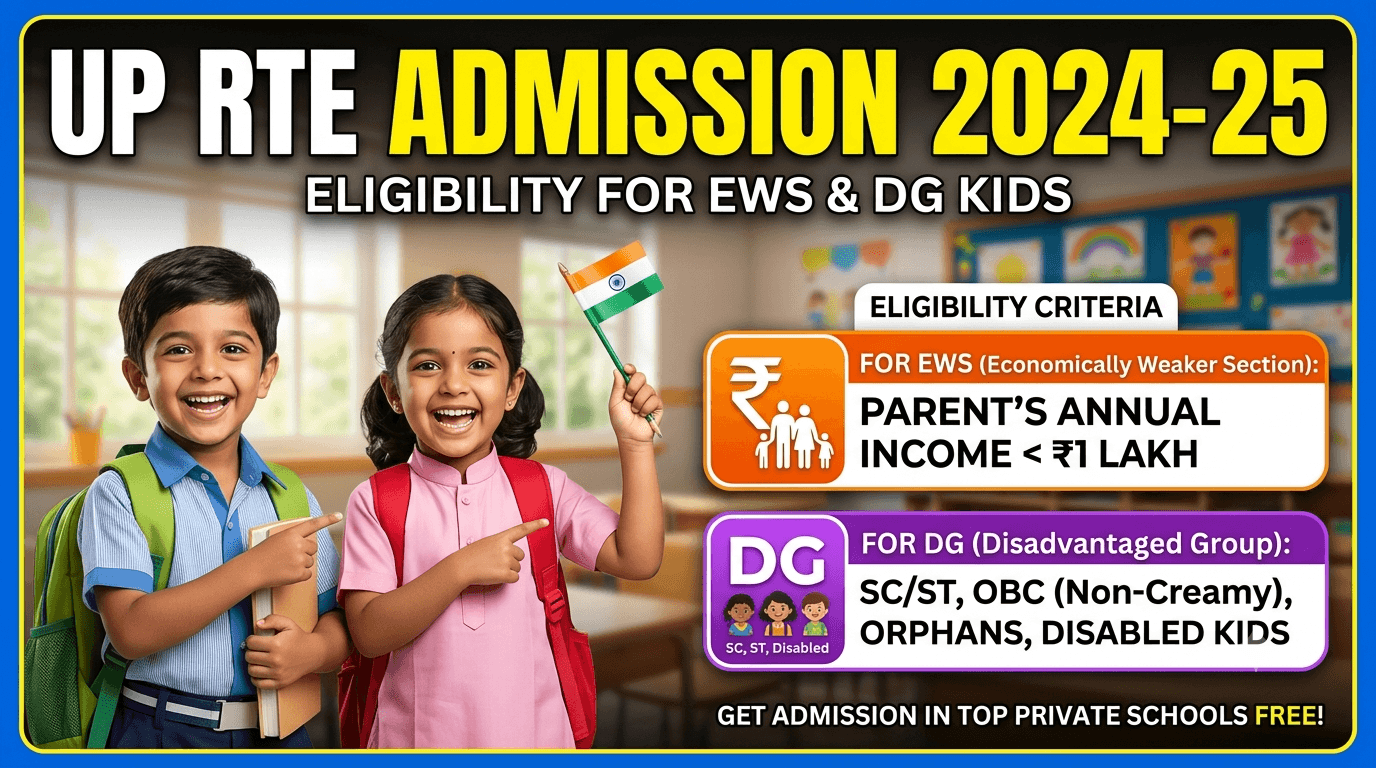
UP RTE Admission: Eligibility for EWS & DG Kids
The Right to Education (RTE) Act, 2009 has transformed the educational landscape of Uttar Pradesh by mandating 25% reservation in private schools for children from economically weaker sections (EWS) and disadvantaged communities (DG). This initiative opens doors to quality education for families who dream of giving their children the best start in life but face financial constraints.
Important Update: As the admission process for the academic session 2026-27 enters its final phase, understanding the eligibility criteria has become crucial for parents seeking this opportunity. The application window is closing soon, making it imperative to act quickly if you wish to secure a seat for your child.
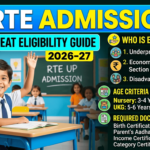
UP RTE Admission: 25% Seat Eligibility Guide
Understanding the RTE Framework in Uttar Pradesh
The RTE Act operates on a simple yet powerful principle: every child deserves access to quality education regardless of their family’s financial background. Under Section 12(1)(c) of the Act, all private unaided schools in Uttar Pradesh must reserve 25% of their seats in entry-level classes—Nursery, LKG, UKG, and Class 1—for children from economically weaker sections and disadvantaged groups.
This reservation is not just about securing admission; it’s about ensuring comprehensive educational support. Children selected under this scheme receive free education up to Class 8, which includes tuition fees, textbooks, and uniforms. The government reimburses private schools up to ₹450 per child per month and provides an additional ₹5,000 annually through Direct Benefit Transfer to parents’ bank accounts for books and uniforms. To increase your chances of success, you can find helpful UP RTE Phase 3 admission tips here.
Who Can Apply Under UP RTE 2026-27?
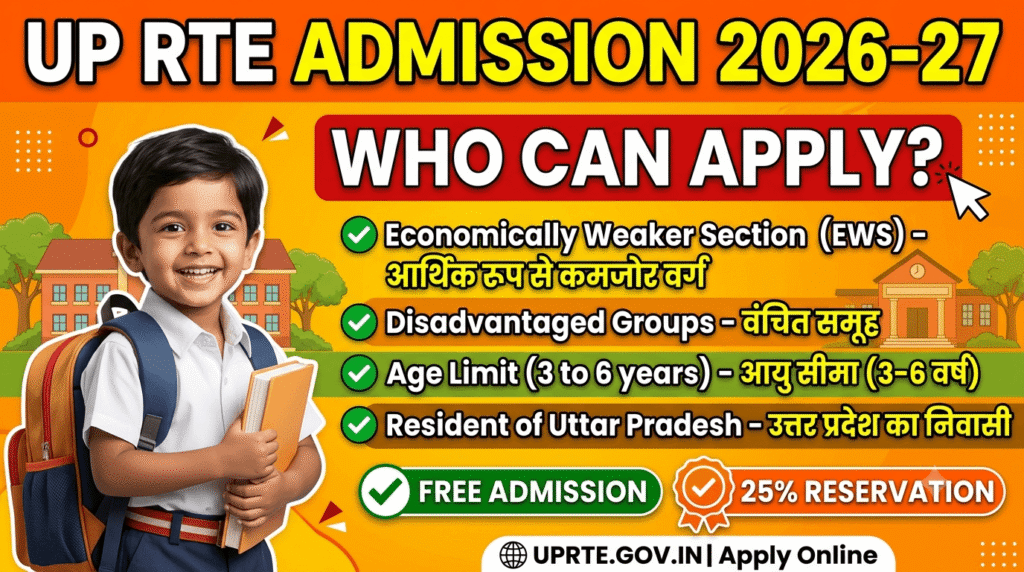
The eligibility structure under the RTE Act categorizes applicants into two main groups, each with distinct criteria and documentation requirements.
Category 1: Economically Weaker Section
This category is designed for families whose annual income falls below ₹1 lakh. The following families qualify under this category:
BPL Families:
Those living below the poverty line as per government records qualify automatically. The BPL status must be verifiable through official documentation.
Antyodaya Card Holders:
Families holding Antyodaya Anna Yojana cards, representing the most economically disadvantaged households, are eligible.
Annual Income Below ₹1 Lakh:
The total annual family income from all sources must be less than ₹1 lakh. This income certificate must be issued by the Tehsildar and remains valid for the current financial year.
Pension Recipients:
Families receiving widow pension, old age pension, or disability pension are also considered under this category, provided they meet the income criteria.
Category 2: Disadvantaged Groups
Unlike the EWS category, this group does not have an income ceiling. It covers children from historically marginalized communities and special circumstances:
SC/ST Communities:
Children belonging to Scheduled Castes or Scheduled Tribes are eligible without any income restrictions. The caste certificate must be issued by the Tehsildar.
OBC Non-Creamy Layer:
Other Backward Class families falling in the non-creamy layer category can apply without income limitations, provided they have the appropriate caste certificate.
Orphan Children:
Children who have lost both parents are eligible. This requires a certificate from the competent authority confirming the child’s orphan status.
Children with Disabilities:
Any child with a recognized disability—physical, visual, hearing, intellectual, or any other—qualifies under this category. The disability certificate must be issued by the Chief Medical Officer or the health department.
Children of Parents with Serious Illness:
Children whose parents are suffering from HIV/AIDS or cancer are eligible. This requires a medical certificate from the Chief Medical Officer confirming the parent’s condition.
Children of Pension Recipients:
If a parent receives widow, old age, or disability pension, the child qualifies under the disadvantaged group category.
Age Criteria for Different Classes
Age calculation is a critical factor in the RTE admission process. All age determinations are made based on the child’s age as of April 1, 2026. The minimum and maximum age limits for different classes are:
Nursery:
Children must be at least 3 years old but not older than 4 years. A child born between April 1, 2022, and March 31, 2023, meets this requirement.
LKG:
The age range is 4 to 5 years. Children born between April 1, 2021, and March 31, 2022, are eligible.
UKG:
Children should be 5 to 6 years old. Those born between April 1, 2020, and March 31, 2021, qualify.
Class 1:
The acceptable age range is 6 to 7 years. Children born between April 1, 2019, and March 31, 2020, can apply.
Age calculation follows strict guidelines, and any deviation—even by a single day—can lead to application rejection. Parents must ensure the date of birth on their child’s birth certificate matches the age criteria exactly.
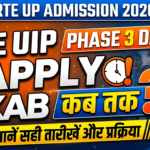
RTE UP Admission Phase 3 Dates – Apply Kab Tak?
Important Changes Introduced for 2026
The 2026-27 admission cycle has brought significant changes to the RTE framework that all applicants should be aware of.
Aadhaar Card No Longer Mandatory for Children
In a progressive move, the government has removed the requirement for children’s Aadhaar cards during the application process. Now, only one parent’s Aadhaar card is required for identification purposes. This change benefits families who may not have obtained Aadhaar for their younger children. However, it’s important to note that to receive the ₹5,000 annual DBT benefits, parents must have an Aadhaar-linked bank account.
Renting Families Not Eligible
The most significant change this year is the exclusion of families living in rented accommodation. Under the new rules, only families residing in their own houses or those whose names appear on ration cards or residence certificates are eligible to apply. The residence must be in the same village panchayat or ward where the school is located.
This change has been implemented to streamline eligibility verification and curb fraudulent applications. While it simplifies administrative processes, some education experts argue it may disadvantage genuinely needy families who rent due to poverty or displacement.
The Neighborhood School Rule
RTE admissions are based on the neighborhood school principle, meaning children must apply to schools located within the same village panchayat or municipal ward where they reside. Acceptable residence proof includes:
- Ration card
- Voter ID card
- Electricity bill
- Water bill
- Job card
- Passport
- Driving license
These documents must show the parent’s name and the current residential address. This requirement ensures that children have reasonable access to their school without excessive commuting.
Essential Documents for Application
Having the right documentation is crucial for a successful RTE application. The following checklist covers all required documents:
Parent’s Aadhaar Card:
This is mandatory for identification and DBT transfers. At least one parent must have a valid Aadhaar card.
Child’s Birth Certificate:
Issued by the municipal corporation or panchayat, this document establishes the child’s age for eligibility verification.
Residence Certificate:
This can be obtained from the Tehsildar or municipal corporation and serves as proof of address within the school’s neighborhood.
Income Certificate:
Only required for EWS category applicants. It must be issued by the Tehsildar, clearly stating the annual family income is below ₹1 lakh.
Caste Certificate:
Required for SC, ST, and OBC category applicants. The certificate must be issued by the Tehsildar and mention the specific category.
Ration Card:
For BPL and Antyodaya cardholders, this serves as proof of economic status.
Disability Certificate:
Issued by the Chief Medical Officer or health department for children with disabilities.
Medical Certificate:
Required for children of parents with HIV or cancer, issued by the Chief Medical Officer.
Orphan Certificate:
Issued by the competent authority confirming the child’s orphan status.
Pension Certificate:
For families receiving widow, old age, or disability pension, issued by the social welfare department.
Who Cannot Apply Under RTE
Understanding ineligibility criteria is as important as knowing eligibility requirements. The following situations disqualify applicants:
Income Exceeding ₹1 Lakh:
For EWS category applicants, crossing the annual income limit means automatic disqualification. There is no flexibility on this criterion.
Age Incompatibility:
Children failing to meet the age criteria for their chosen class cannot apply. Even minor deviations in age lead to rejection.
Rented Accommodation:
As per the new rule, families living in rented houses are not eligible to apply.
Residence Outside School Area:
Children living outside the school’s designated neighborhood area cannot apply to that school.
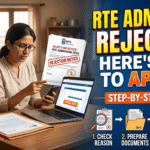
Invalid or Missing Documents:
Applications without valid documents or with incomplete documentation are rejected.
Application Timeline and Process
The admission process for 2026-27 is being conducted in three phases. Understanding this timeline is crucial for parents who haven’t applied yet.
Phase 1:
The application window was open from February 2 to February 16, 2026, with the lottery held on February 18, 2026.
Phase 2:
The second phase allowed applications from February 21 to March 7, 2026, with the lottery scheduled for March 9, 2026.
Phase 3:
The final phase started on March 12, 2026, and will close on March 25, 2026. The lottery for this phase will be conducted on March 27, 2026.
Important:
March 25, 2026, is the last date to apply. Parents who haven’t submitted their applications must act immediately to avoid missing this opportunity.
The Selection Process
The RTE admission process does not involve interviews or academic tests. Selection is based entirely on a computerized lottery system conducted at the district level. This ensures transparency and eliminates any potential bias.
In the first phase, all eligible applicants are considered. If seats remain vacant after the first phase, the process continues to Phase 2 and then Phase 3. Seats that remain unfilled after all three phases are surrendered to the general category.
Parents can select up to 10 schools during the application process. The lottery determines allocation, with preference given to applicants within the school’s neighborhood. If multiple children apply to the same school, the computer system randomly selects the allotted number of students.
Financial Support Under RTE
One of the most significant benefits of RTE admission is the comprehensive financial support provided:
Tuition Fee Waiver:
Selected children receive free education up to Class 8, with no tuition fees charged by the school.
Textbook Support:
The government provides ₹5,000 annually directly to parents’ bank accounts through DBT for purchasing textbooks and uniforms.
Uniform Provision:
The scheme covers the cost of school uniforms, ensuring children can attend school without additional financial burden on families.
School Reimbursement:
Private schools receive up to ₹450 per child per month from the government to compensate for the education provided.
Consequences of Fraudulent Documentation
The government has adopted a strict stance against fraudulent applications. Providing fake income certificates, caste certificates, or residence proofs can lead to serious consequences:
- Legal action against the parents or guardians
- Blacklisting of the child from future RTE admissions
- Cancellation of the admission even if selected
- Possible criminal proceedings for document forgery
This zero-tolerance policy is designed to ensure that the benefits reach genuinely deserving families.
Common Misconceptions About RTE
Several misconceptions surround the RTE admission process, and clearing these can help parents make informed decisions.
Myth: RTE admits children based on merit.
Reality: Selection is entirely through a computerized lottery system with no academic criteria.
Myth: Only BPL families can apply.
Reality: Both EWS (with income below ₹1 lakh) and disadvantaged groups (without income limit) can apply.
Myth: RTE admission means guaranteed free education until Class 12.
Reality: Free education is guaranteed only up to Class 8.
Myth: Private schools can refuse RTE admissions.
Reality: Schools must comply with the 25% reservation as per the law.
Myth: RTE applicants cannot choose their preferred schools.
Reality: Parents can select up to 10 schools based on their preference.
Preparing for a Successful Application
To maximize your chances of a successful RTE application, follow these steps:
Verify Eligibility:
Double-check that your family meets all criteria—income, age, residence, and category requirements.
Gather All Documents:
Collect all required documents well in advance. Ensure they are valid and current.
Check Age Carefully:
Recalculate your child’s age as of April 1, 2026, to confirm it matches the class requirements.
Understand the New Rules:
Pay special attention to the 2026 changes regarding Aadhaar and rented accommodations.
Apply Early:
Don’t wait for the last date. Applying early gives you time to correct any issues.
Choose Schools Wisely:
Select schools within your neighborhood and list up to 10 options in order of preference.
Keep Digital Copies:
Scan all documents and keep digital copies ready for online application submission.
Monitor Application Status:
After submission, regularly check the official portal to track your application status.
Frequently Asked Questions
Is Aadhaar mandatory for my child?
No, child’s Aadhaar is not mandatory for application. Only one parent’s Aadhaar card is required.
Can I apply if my family income is exactly ₹1 lakh?
No, the income must be less than ₹1 lakh for the EWS category. Even a rupee above the limit disqualifies the application.
What if my child’s age doesn’t match the class criteria?
You cannot apply for that class. You may need to choose the appropriate class where your child meets the age criteria.
Can I apply for schools outside my ward?
No, you can only apply to schools in the same village panchayat or ward where you reside.
Is there any application fee?
No, the RTE application process is entirely free. Beware of anyone asking for money.
What happens if I’m not selected in the lottery?
If seats remain after the first phase, you may be considered in subsequent phases. If not selected, you can apply in the next academic year.
Can government school students apply?
Yes, students studying in government schools can also apply for RTE seats in private schools.
Is there any interview or test? No, selection is purely through computerized lottery.
What support is available for differently-abled children?
Schools must provide necessary facilities and support as per the RTE Act’s inclusive education provisions.
Can I choose any private school in Uttar Pradesh?
You can only choose private schools that have adopted the RTE framework and are located in your neighborhood area.
Final Thoughts
The RTE Act represents a transformative opportunity for families seeking quality education for their children. As the final application deadline approaches for the 2026-27 session, understanding the eligibility criteria thoroughly becomes paramount.
The key takeaways are clear: EWS applicants must have an annual family income below ₹1 lakh, while disadvantaged group applicants face no income barrier. Age criteria must be strictly followed, and this year’s changes regarding Aadhaar and rented accommodations cannot be ignored.
For those who have not yet applied, March 25, 2026, marks the final opportunity. The process is designed to be transparent through the lottery system, eliminating any bias and ensuring equal opportunity for all eligible children.
Parents must remember that RTE admission is not just about securing a seat—it’s about providing their children with the foundation for a brighter future. With proper preparation and timely action, this opportunity can transform a child’s educational journey and, ultimately, their life trajectory.
For the most current information and to submit applications, visit the official portal at rte25.upsdc.gov.in. Stay informed, stay prepared, and give your child the gift of quality education through the RTE Act.




1 thought on “UP RTE Admission: Eligibility for EWS & DG Kids”